Have you ever rubbed a chamomile tea bag on an irritated eye because “it's natural”? Or have you heard that if you start wearing glasses, your eye will become lazy? Don't worry, you're not alone! The world of eye health is full of old wives' tales, urban legends and “miracle cures” that, rather than helping, can complicate your life (or your vision).
At Vision.app, we are dedicated to caring for your vision with science and technology, not fairy tales. That's why we've compiled some of the most persistent and, let's be honest, sometimes even funny myths to uncover the truth. Get ready to laugh, be surprised and, above all, learn how to take care of your eyes as they deserve.
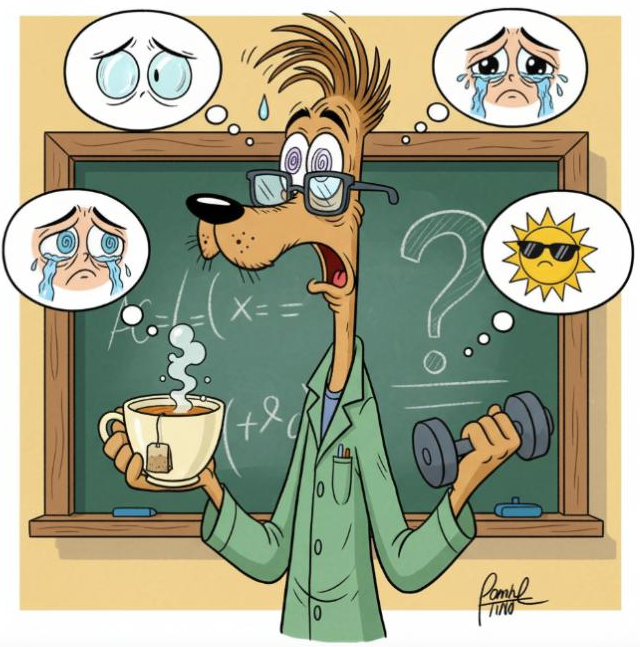
Myth 1: ‘Chamomile cures everything, even red eyes!’
Ah, chamomile. That universal balm for the soul... and supposedly also for irritated eyes or conjunctivitis. How many times have we seen or heard the recommendation to apply chamomile tea bags or soaked compresses? The idea sounds innocent and “natural”, right?
The harsh reality: Although chamomile has anti-inflammatory properties when ingested, applying it directly to the eyes is a recipe for disaster. Homemade infusions may contain small particles, pollen, or even bacteria that, instead of providing relief, can worsen irritation, cause an allergic reaction, or even introduce a real infection! For mild fatigue or irritation, artificial tears or warm compresses are your best friend. And if it doesn't get better, head to the ECP!
Myth 2: ‘By doing eye exercises, I will cure my short-sightedness (and throw my glasses away).’
This myth is the one that generates the most excitement and has emptied the most wallets. The promise is tempting: a few eye exercises, following a ball or staring into the distance, and goodbye myopia! The idea of getting rid of glasses or contact lenses without resorting to laser treatment or surgery is, for many, a dream come true.
The harsh reality: Sorry to burst your bubble, but there is no scientific evidence to show that eye exercises can permanently cure or reverse refractive errors such as myopia, astigmatism or hyperopia. Myopia, for example, is linked to the shape of the eyeball, and that cannot be “exercised”. While some exercises may help with eye strain or improve certain focusing skills, they will not change the structure of your eye. So, for now, your glasses and contact lenses remain your faithful companions.
Myth 3: ‘If my eyes water a lot, I can't have dry eye!’
This is one of the most counterintuitive myths and, therefore, one of the most dangerous because it discourages people from seeking treatment. Popular logic says: if my eyes water a lot, it means they are hydrated, right? Wrong!
The harsh reality: Paradoxically, excessive tearing is one of the most common symptoms of dry eye syndrome. Why? When the surface of the eye is very dry, the brain interprets this as an emergency and sends a signal to produce excess tears. But these tears are often of ‘poor quality’ (they don't have the right components to lubricate properly), evaporate quickly, and the cycle of dryness-irritation-tearing repeats itself. So, if your eyes water for no apparent reason, don't ignore it. It could be dry eye, and there are effective treatments for it.
Myth 4: ‘Sunglasses are only for summer and for showing off.’
Why hide beautiful eyes behind dark glasses when the sun isn't shining? Many people think that sunglasses are a fashion accessory or only for beach holidays.
The harsh reality: Big mistake! Ultraviolet (UV) radiation from the sun is a threat to your eyes all year round, even on cloudy days or in winter. UV rays can contribute to the development of cataracts, macular degeneration and other serious long-term eye conditions. Good sunglasses with 100% UV protection are as important as sunscreen for your skin. It's not about looking cool, it's about protection!
As you can see, visual health is surrounded by more myths than a fairy tale. Setting aside these myths and trusting science is the first step towards real and effective eye care. Instead of home remedies or magic solutions that can put your eyes at risk, the key lies in prevention and constant monitoring.
At Vision.app, we offer you exactly that: a scientifically validated tool to monitor your prescription (myopia, astigmatism, presbyopia) easily and regularly from home. Tracking and detecting changes early is essential.
Don't wait for a myth to play tricks on you or for the symptoms to become obvious. Take control of your visual health today. Start monitoring your vision with Vision.app and remember: for a complete and professional diagnosis, always consult your optician-optometrist or ophthalmologist. Your eyes will thank you for it!