In an era where technology is constantly redefining the limits of what is possible, the field of visual health is undergoing an unprecedented transformation. Artificial Intelligence (AI), in combination with telemedicine and teleoptometry, is opening up new frontiers in diagnosis, monitoring and treatment in visual health.
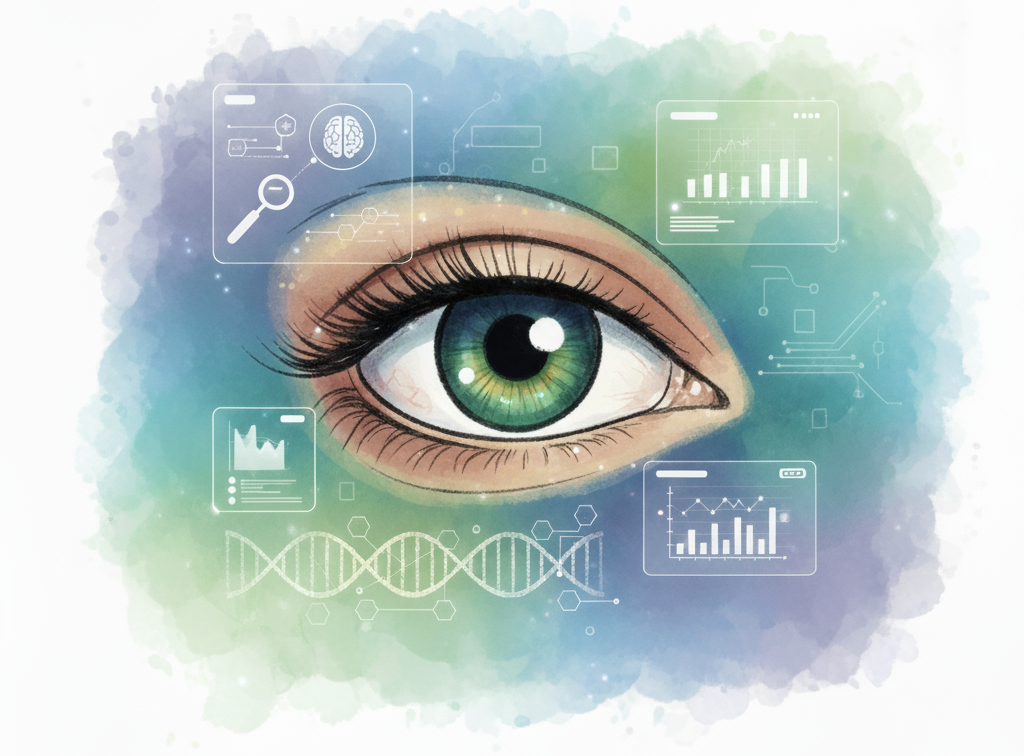
AI and Eye Care
Teleoptometry and telemedicine, which enable remote healthcare services to be provided using information and communication technologies, have found a formidable ally in AI. In the field of optometry and ophthalmology, this synergy is enabling:
- More accurate and earlier diagnoses: AI algorithms can analyse retinal images, such as fundus photographs or optical coherence tomography (OCT) scans, with an accuracy that in some cases exceeds that of the human eye. This is crucial for the early detection of diseases such as diabetic retinopathy, glaucoma, and age-related macular degeneration (AMD).
- Democratised access to care: Teleoptometry removes geographical barriers, allowing patients in rural areas or with reduced mobility to access specialist care. AI enhances this capability by enabling automated initial screening, identifying cases that require urgent review by a specialist.
- Optimisation of professional time: By automating repetitive tasks such as image analysis or appointment management, AI frees up optometrists and ophthalmologists to spend more time interacting directly with patients and dealing with more complex cases.
Practical applications that are already a reality
Far from being science fiction, AI in visual health is already being successfully applied:
- Personalised monitoring: There are AI systems that, based on historical and real-time data, can predict the progression of myopia in children or monitor the effectiveness of dry eye treatment.
- Virtual assistants: These tools can perform initial patient triage, answer frequently asked questions, and manage appointments, improving clinic efficiency.
- Personalised treatment pathways: AI can analyse large volumes of clinical and genetic data to help define treatments that are more tailored to each patient's individual characteristics.
Looking ahead: Challenges and unlimited potential
Despite enormous advances, the integration of AI into eye care still faces significant challenges. The quality and diversity of the data used to train algorithms are essential to avoid bias and ensure accuracy. The security and privacy of patient data are, of course, an absolute priority.
However, the potential is immense. We are moving towards a future in which:
- Smart devices in the home will enable visual tests to be carried out and eye health to be monitored continuously.
- AI algorithms will discover new biomarkers that will help us understand and treat eye diseases in ways we cannot even imagine today.
- Eye care will be truly predictive, personalised, preventive, and participatory.
- Artificial intelligence does not replace the experience and clinical judgement of eye care professionals, but rather enhances their capabilities. It is a powerful tool that, when used ethically and responsibly, has the potential to improve the quality of life for millions of people around the world.
References
- De Cecco, C., & Van Assen, M. (2022). Artificial intelligence and telemedicine in the health sector – Opportunities and challenges. CAF.
- Koteluk, O., Wartecki, A., Mazurek, S., Kołodziejczak, I., & Mackiewicz, A. (2021). How Do Machines Learn? Artificial Intelligence as a New Era in Medicine. Journal of Personalized Medicine, 11(1), 32.
- Sociedad Española de Retina y Vítreo (SERV). "Inteligencia Artificial en Oftalmología: Hacia la reinvención de la práctica clínica".
- Organización Panamericana de la Salud (OPS). "Hablemos de salud - Ep. 4: TELEMEDICINA E IA: ¿El futuro de la salud?"