Digital Habits
& Myopia Control
myopia.app tracks screen time, viewing distance and ambient light in real time — combining everything into a single daily risk score: your child's diopter-hours.
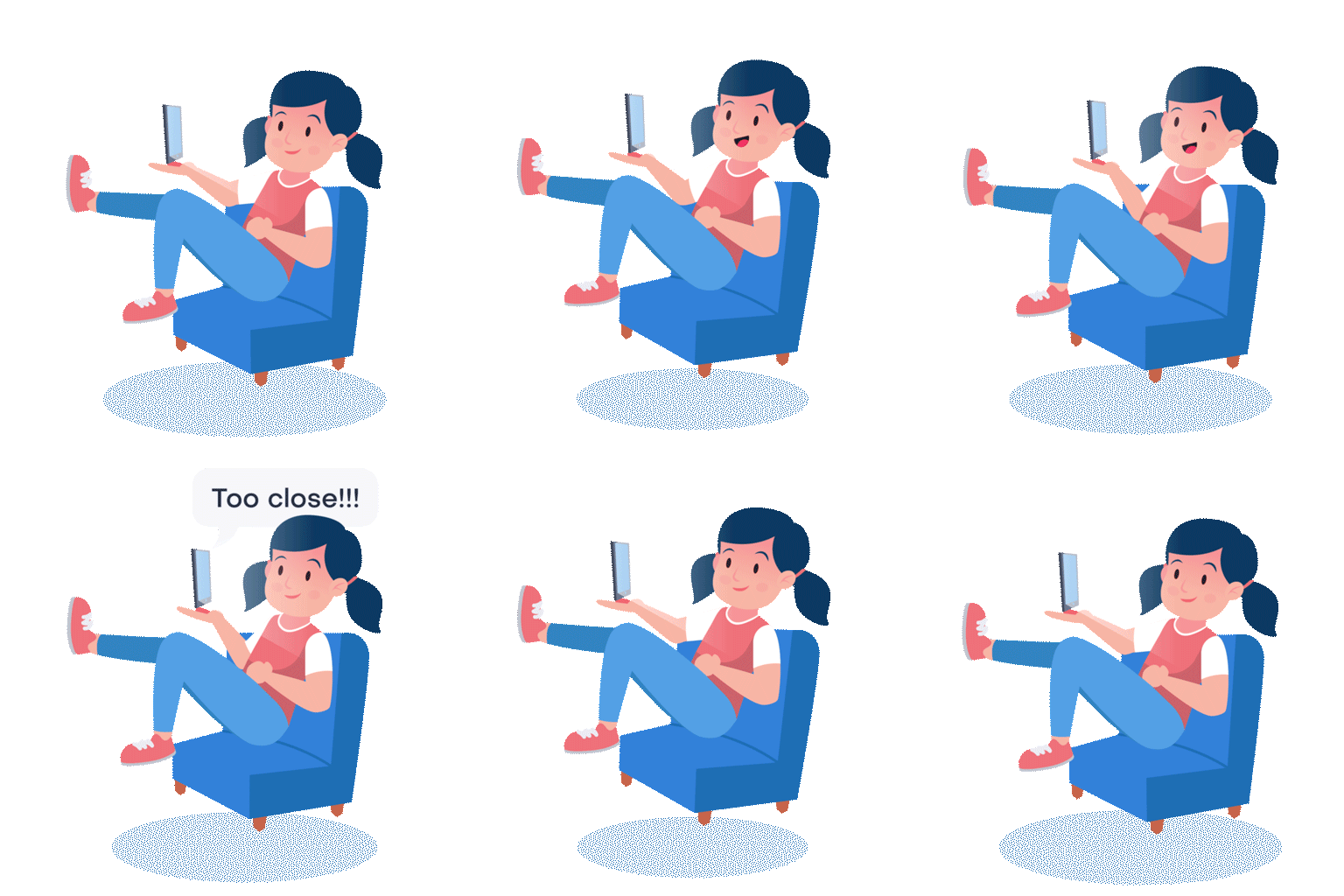
What are diopter-hours?
A diopter-hour is a unit of cumulative near-work load. It combines how long a child spends looking at a screen with the optical demand of that activity — essentially, how hard the eye has to work to stay focused.
Research shows that children who accumulate more diopter-hours per day have faster myopia progression. It's not just about total screen time — distance matters too. Reading a phone at 20 cm is far more demanding than watching a TV at 3 metres.
myopia.app estimates diopter-hours continuously throughout the day using the phone's front camera and ambient light sensor, giving you a real-time picture of your child's visual load.
<3h
recommended daily near-work limit for school-age children
33cm
minimum safe viewing distance monitored by the app
2h
outdoor time per day shown to reduce myopia onset risk by up to 50%
20-20-20
rule: every 20 min, look 20 ft away for 20 seconds
Everything tracked. All in one place.
The app runs quietly in the background, measuring screen time, distance and light levels. At any moment you can check the daily diopter-hour score and see which habits need adjusting.
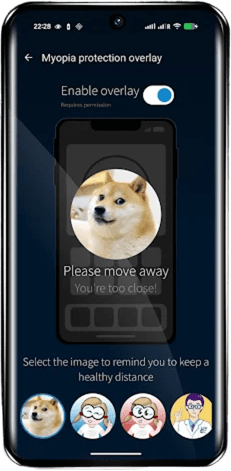
Protective layer
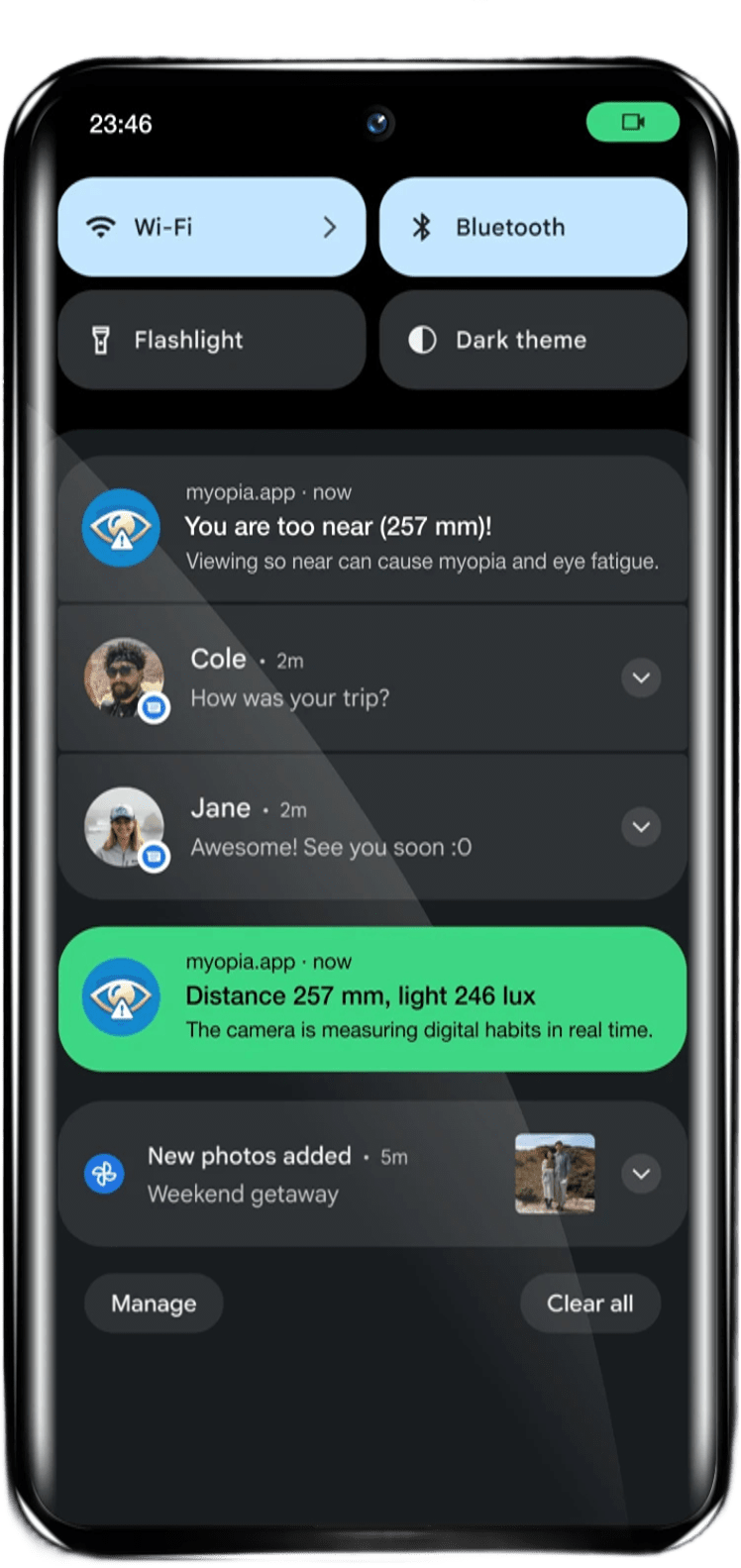
Real-time alerts
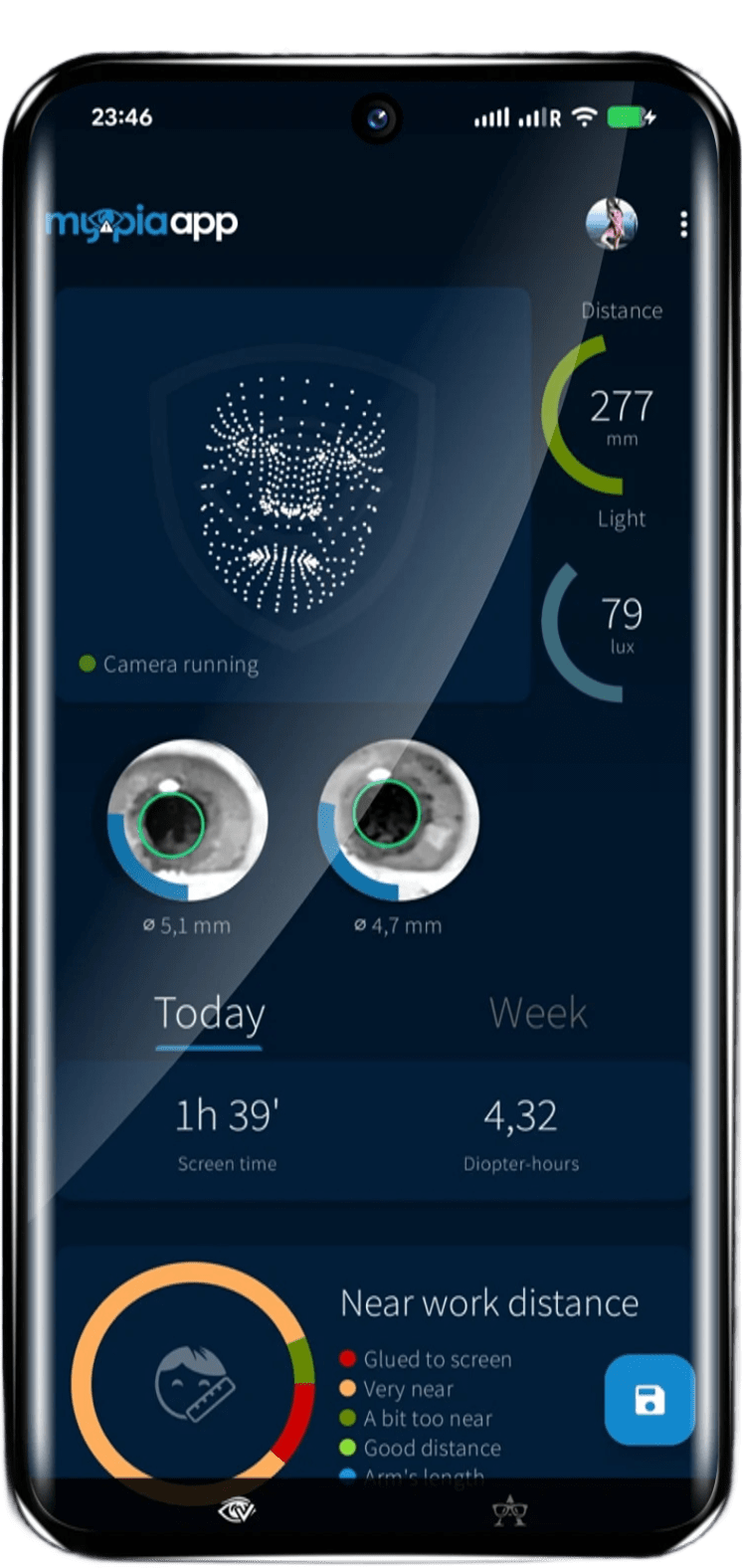
Live monitoring
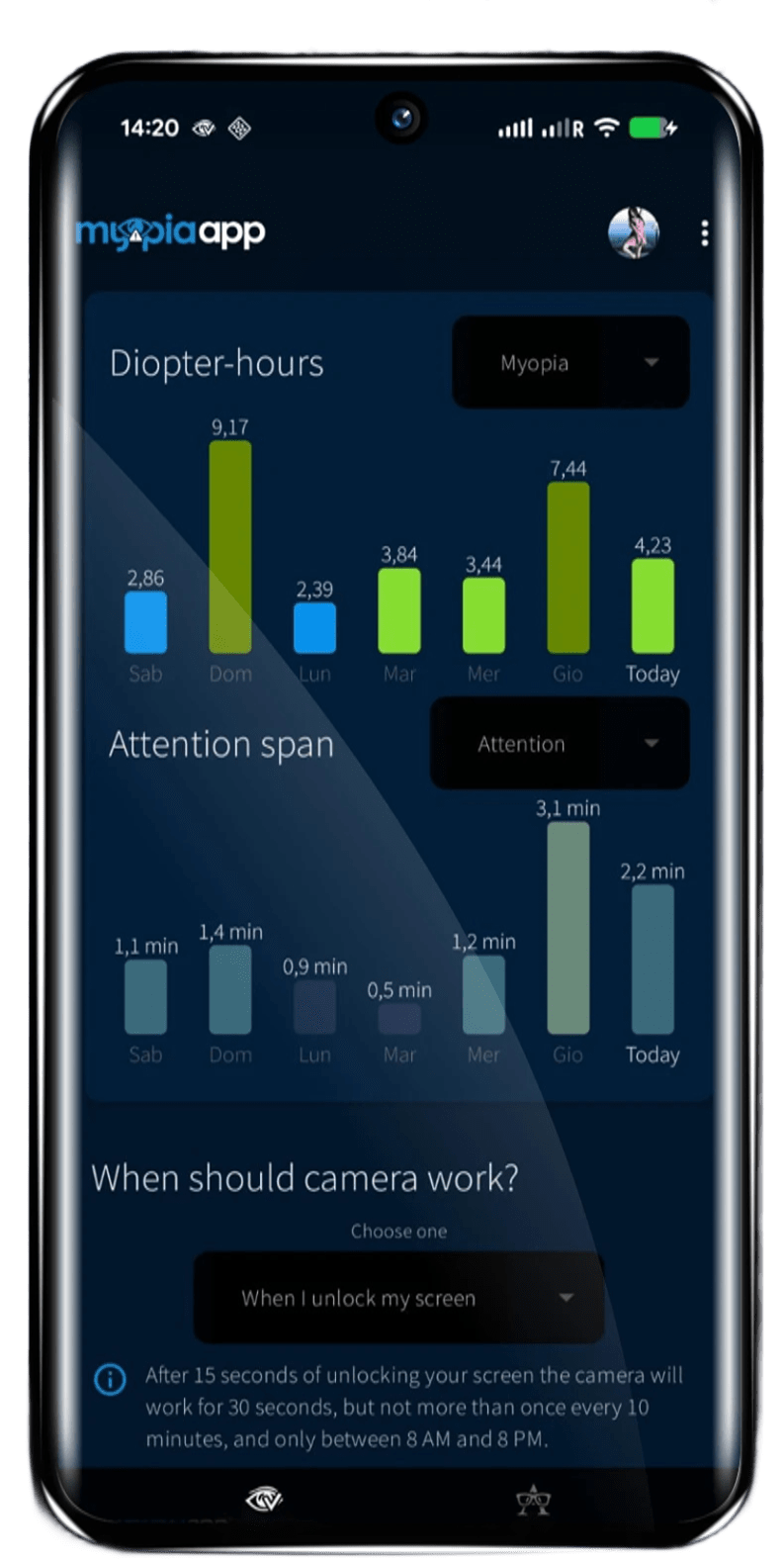
Weekly summary
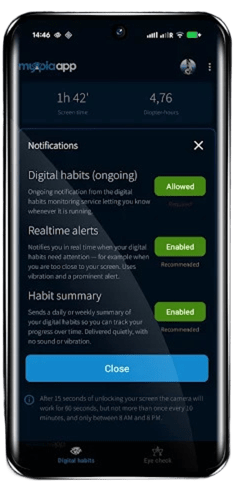
Notifications
Three signals. One risk score.
Screen time
The app detects when the screen is in active use and logs cumulative near-work minutes across the day — broken down by app, activity type and time of day.
Viewing distance
Using the front camera, myopia.app estimates how far the child's eyes are from the screen and alerts when the distance drops below the safe threshold of 33 cm.

Ambient light
The light sensor measures environmental brightness. Low-light screen use is flagged as high-risk; high outdoor light levels are credited as protective exposure.
Set it up in minutes
Create a child profile in myopia.app
Enter your child's age and current prescription. The app uses this to calibrate the diopter-hour thresholds to their specific risk level.
Enable background monitoring
Grant the app permission to run in the background. It works silently — no interruptions during use, just a daily report at the end of the day.
Check the daily diopter-hour score
Each evening, review the score. Green means the day was within safe limits. Amber or red means the visual load was too high and habits need adjusting tomorrow.
Share weekly reports with your eye care professional
Export the week's data and bring it to your child's next eye appointment. Objective usage data helps clinicians make better decisions about myopia management.
Why digital habits matter
Every additional hour of near work per day is associated with a significant increase in myopia risk. Screen distance was an independent predictor of progression.
Children who spent at least 2 hours outdoors per day had a markedly lower rate of myopia onset — linked to bright light exposure stimulating retinal dopamine.
Systematic review confirming that diopter-hours accumulated per day is one of the strongest modifiable risk factors for myopia progression in children aged 6–14.
This feature is designed as a supportive tool. Always consult a qualified eye care professional before starting any myopia management programme.

Know your child's daily visual load
myopia.app combines digital habit tracking, red light therapy, outdoor time monitoring and myopia progression data — all in one place.